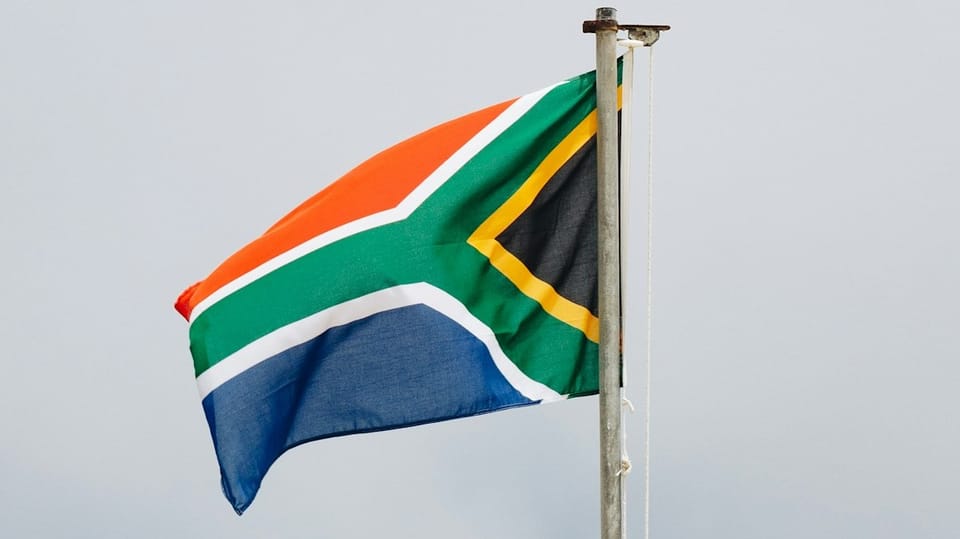
As Bell Pottinger prepares to put itself into administration following its expulsion from the Public Relations and Communications Association (PRCA), here's an opinion piece, which calls out the PRCA's humbug.
PRCA betrayed the PR trade by witch hunting Bell Pottinger
The PRCA has willfully destroyed a great British PR brand, and then boasted about it in the public domain. Shame on them.
Bell Pottinger (BP) was working for the controversial Gupta family as a cover for working for Zuma and the ANC. BP's work for the Guptas was, it seems, done in the dark by anonymous agents in social media. Sometimes, those agents were fake. Moreover on behalf of the Guptas, BP launched attacks in SA on people and firms who were existing clients of BP.
Promulgating PR messages in the dark for clients who are proxies for political parties or corrupt individuals and then deploying behind the scenes agents in the swirl of social media are two very questionable approaches to the Dark Arts. And compounding that by castigating one's own clients on behalf of another client is, to say the least, a conflict of interest.
Of course if it were the case that everybody did this and everybody else knew that that was so, that would not make it right but it would at least be the case that the audience was forewarned. However we all know that the whole point of deploying such tactics is that the audience remains ignorant of the sources, methods and intentions of the behind the scene string pullers.
There is no moral or ethical obligation to name one's client if all one is doing is ghost-writing speeches or providing insight and lines of argument, narrative and messaging. Though that should not encompass undermining an existing client, unless the work is strictly fire walled by a separate conflict brand.
But once a PR company or person begins to act or mediate with third parties on behalf of a client, full transparency is absolutely essential for the purpose of public trust.
It does not matter that a client's arguments or reasoning are weak or, in the eyes of some, reactionary. Regardless of the strength or sustainability of a client's messaging, every client, even an oligarch or dictator, is entitled to pay someone to formulate them in the best possible light. Whatever the client or issue a PR tackles, though, telling lies and resorting to deception is not acceptable.
Yet BP does not so much stand accused of resorting to the Bernays-type dark art practices mentioned above, so much as for promulgating a divisive racist message in post-apartheid South Africa. But the truth is that everyone on all sides in SA promotes a version of the anti-White Monopolist line, so it barely matters that BP is saying it on behalf of the Gupta family.
So BP's supposed racialism was simply the sort of nonsense by which all sides in SA proceed, and not the worst example of it. But, accepted, quite separately BP was indeed guilty of unethical dissemination of Fake Opinion. That's something that goes on all the time in UK politics at the behest of PR pros, as anybody who witnessed the last General Election, the Brexit debate or the Chilcot Inquiry into the Iraq war knows full well. Also, any PR who commissions reports to garner headlines on behalf of clients, often referred to as advocacy research, is, arguably, guilty of spreading fake opinion, too.
Meanwhile, the dilemma every PR professional faces in non-western countries is the predominance of oligarchical practices, which make political and business interests inseparable. It is just simply not honest to pretend or to demand that PR practitioners should operate to the same standards in third and second world countries as they do in the first world.
Instead we must be honest about the working conditions we find ourselves in wherever we work in the world.
All of us who have worked in non-western countries have had to juggle such ethical issues as best we can.
The PRCA has not properly clarified the ethical issues at stake. It has instead indulged in opportunistic grandstanding and virtue signalling at the expense of BP. This is nothing more than a cynical ploy to boost the PRCA's moral authority in the UK by unleashing an unhelpful smokescreen.
A more ethical and honest approach from the PRCA would have been to use this crisis as a case study to kick start a proper debate about the ethics and challenges of working in countries such as SA. It might also have opened up a discussion about modern propensity of PR pros to resort to spreading fake opinion (not to be confused with fake news) at home too.
But instead of doing that it chose to side with one dodgy political force, the Democratic Alliance and the South African Communist Party, in SA at the expense of another, the Gupta family and President Jacob Zuma. In other words, PRCA became a partisan actor in SA politics, for self-interested, entirely selfish reasons. Or if we want to be more forgiving, we could assume that the leadership of PRCA is not very bright and that it has been suckered by the enemies of Zuma in SA into destroying BP and ruining the livelihood of hundreds of PR consultants employed by the company. Take your pick.
Subscribe to our newsletter.
Become a subscriber receive the latest updates in your inbox.